
Free
Exhibition About History ▪︎ Darija Petković, Neja Tomšič and Vladimir Živojinović
Description
History is a strange science. In today's world of fast communication and abundance of information, it seems almost trivial and harmless. For most people, events from the past are always slightly distant from reality and do not have the same impact after years, decades, or centuries have passed. On the other hand, it is clear that every ruling regime seeks to control historical discourses as they are an integral part of the national and cultural identity of a certain group. Therefore, history is always monitored from above. The victor in a conflict strives to control history to be remembered as a winner, and in that process, manipulation of contexts often occurs. This is probably why today the boundary between history and mythology is so ambiguous and undefined.
Thus, history is never completely static and defined. On the contrary, it is quite dynamic and changeable. The current situation can easily transform the perception of the past. Historical revisionism appears in every regime and era; newly formed states strive to create their own historical narratives that are often linked to conflicts, struggle, and sacrifice; the contemporary woke movement calls for a reexamination of traditional historical canons and advocates for a revision of history based on today's ethical standards; increasingly powerful corporations, now owning the majority of media and online communication platforms, create their own history based on their short-term interests, hiding the role of big businesses in turbulent events from the past.
Impartial, objective, and nonlinear historiography can reveal a series of paradoxes that seriously undermine established and idealized heroic narratives. The three artists at the exhibition titled About History, Darija Petković, Neja Tomšič, and Vladimir Živojinović, each in their characteristic way, explore historical narratives, but always differently and far from commonly accepted interpretations. They also often deal with hidden episodes of great historical narratives, always observing them from a critical distance. They question different representations of history and its role in shaping political and public discourses of the present, dealing with specific episodes of local and global history (which are inevitably linked). Although their practices are completely different, all three combine image and text to further contextualize content.
In his work Damnatio memoriae, 2017-2024, Darija Petković deals with ways of constituting memory. Using photographs, found objects, archival material, and texts, he analyzes selected historical events that are inscribed in collective memory through public and media discourses. The work follows and comments on the consequences of social, ideological, and economic transition in Croatia, and the wider region, characterized by the rejection of social values of egalitarianism and historical revisionism. The central point of the series is symbolic locations that have marked the recent history of Croatia. Three elements of this series are presented at the exhibition; one of them is the work Uvala Slana (2018), which shows the location of the first concentration camp of the Independent State of Croatia (1941-1945), whose silhouette is featured on the currency from that time.
In her interdisciplinary artistic practice, Neja Tomšič often explores suppressed and neglected episodes from history. In the work Opium Clippers, 2015-2024, she uses multi-layered approaches, such as performance storytelling, artist books, appropriated photographs, and texts, to collect and tell stories that examine the legacy of colonialism, hidden and ignored in official historiography, offering answers to numerous complex questions related to current geopolitical relations. Opium Clippers deals with the period when countries of East Asia were forced to enter the global free market, thereby relinquishing a significant part of their sovereignty. The work reveals the legacy of the opium wars today, as some of the largest banks, insurance companies, investment and transport companies have built their power on opium trade.
In the series Danube Division, 2022-2024, Vladimir Živojinović reflects on historical events from a very personal perspective. He focuses on the events surrounding the breakthrough of the Salonika Front at the end of World War I, in which his great-grandfather participated, resulting in the liberation of Serbia in 1918. The series of photographs, combined with explanations in texts, offers a microhistorical perspective and presents events that are ubiquitous in literature today in a different light. To counteract any kind of simplified narrative, Živojinović applies different approaches, such as landscape photographs with context, portraits, family archives, creating a personal topography that shows the interconnection of official and personal history.
- For teens
- Exhibitions
- For company
- For adults


WEIGHT LOSS IN 4 WEEKS
More from this organizer
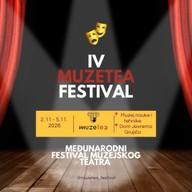
Muzetea Museum Theatre Festival
04.11.2026

Magic of Movement - Training at Hogwarts
04.11.2026
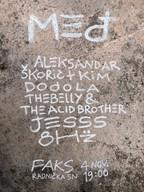
Aleksandar Škorić & Andrey Kim, Dodola, The Belly And The Acid Brother, Jesss, 8Hz, Faks
04.11.2026

The Second Season of the Raznotravye Band
04.11.2026
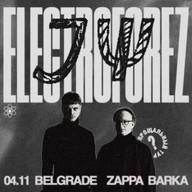
Electroforez
04.11.2026
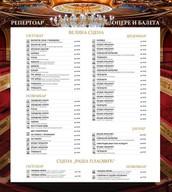
Swan Lake
04.11.2026
Phantom of the Opera
04.11.2026

Popcorn
05.11.2026