When we turn on a new episode of a favorite travel show or watch a video from a well-known blogger, it seems that everything happens easily and naturally. The host arrived, chatted with the locals, showed some beautiful places — and a few days later viewers saw the finished episode.
In reality, behind every such video stands the enormous work of dozens of people and hundreds of small decisions the viewer will never see.
We had the chance to spend a day with the film crew of the show hosted by Zhanna Badoeva and watch how an episode devoted to Serbia comes to life. That experience completely changed our idea of how projects like this are made.
A Small Team — Enormous Work
The most unexpected discovery was the size of the film crew.
It seems that shows like this are filmed by a whole army of specialists. In practice, only a few people work directly on the shoot: the host and two camera operators.
But behind this small team stands a large production center. Long before the shooting day begins, specialists plan the route, arrange the locations, find the people to feature, prepare the script, the questions, background materials, and think through the sequence of all the segments.
When the crew arrives on site, it seems that everything is happening spontaneously. In reality, an enormous amount of work has already been done in advance.
Every Minute Is Scheduled
The shooting day starts early in the morning and runs almost without breaks.
From 9 a.m. the team sets off along the pre-planned route. Usually only an hour to an hour and a half is allotted for each location. In that time they need to meet the people, film the segment, record the interview, capture beautiful shots, film the intros, and immediately move on.
There is almost no time to spare. If a delay occurs somewhere, it automatically affects the entire schedule that follows.
Unforeseen Situations Are a Normal Part of the Job
Perfect shooting days practically don't exist.
Sometimes it turns out that a location doesn't match expectations at all. Sometimes the person meant to be featured simply doesn't show up or stops answering the phone. It happens that the person who invited the crew forgot to warn the rest of the staff, and the team ends up facing completely unprepared people.
Imagine the situation: cameras, the host, and the operators suddenly walk into a room, and the staff didn't even know there would be a shoot today. The phone calls begin, the explanations, the search for someone in charge — and along with that, quite understandable tension.
That's why the main quality of such a team is flexibility. If something goes off plan, you have to quickly find another solution, another person to feature, or a new angle for the story. To make the most of what's here and now.
Working in Any Weather
Once filming has started, rain, heat, or a strong wind do not become a reason to stop.
The host's work is especially impressive. It can be over thirty degrees outside, with a scorching sun and no shade at all, but the viewer will never notice it. On camera the host stays calm, smiles, looks fresh, and keeps working as if the weather were perfect.
That takes tremendous composure.
An Interview Is a Real Art
The script is prepared in advance. It sets out the topics and questions that need to be covered.
But the hardest part begins in the conversation with the person.
Many people get nervous in front of the camera, freeze up, or, on the contrary, talk for too long. The host's task is to create an atmosphere in which the person relaxes, feels comfortable, and simply tells their story.
At the same time she has to keep an eye on the time, steer the conversation when needed, ask follow-up questions, and hold the viewer's attention.
From the outside it looks easy, but behind that ease lies enormous professional experience.
The Camera Operators Work Without Stopping
While the interview is going on, the operators are not just holding the cameras.
They are constantly looking for new shots, details, emotions, beautiful views, interesting light, changing camera positions, and literally assembling the future episode piece by piece. It is thanks to their trained eye that the viewer later sees a beautiful, living story rather than just a sequence of frames.
After the Shoot the Work Only Begins
When the shooting day ends, another big stage begins.
Editing, voice-over, choosing the music, color correction, sound work, weaving dozens of separate segments into a single story.
That is when that very episode is born — the one the viewer will watch in twenty or thirty minutes.
Why the Final Result Differs From What Happens on Location
While watching, it sometimes seems that certain lines sound different from how they were said on site.
That's natural.
First, international shoots always involve translation, which means a literary adaptation appears. Second, television tells a story. So the material is arranged to be clear, logical, and interesting for the viewer.
The main thing throughout is to preserve the mood, the atmosphere, and the meaning.
The Serbia We Want to Show the Whole World
Perhaps the most rewarding outcome for us was the finished episode itself.
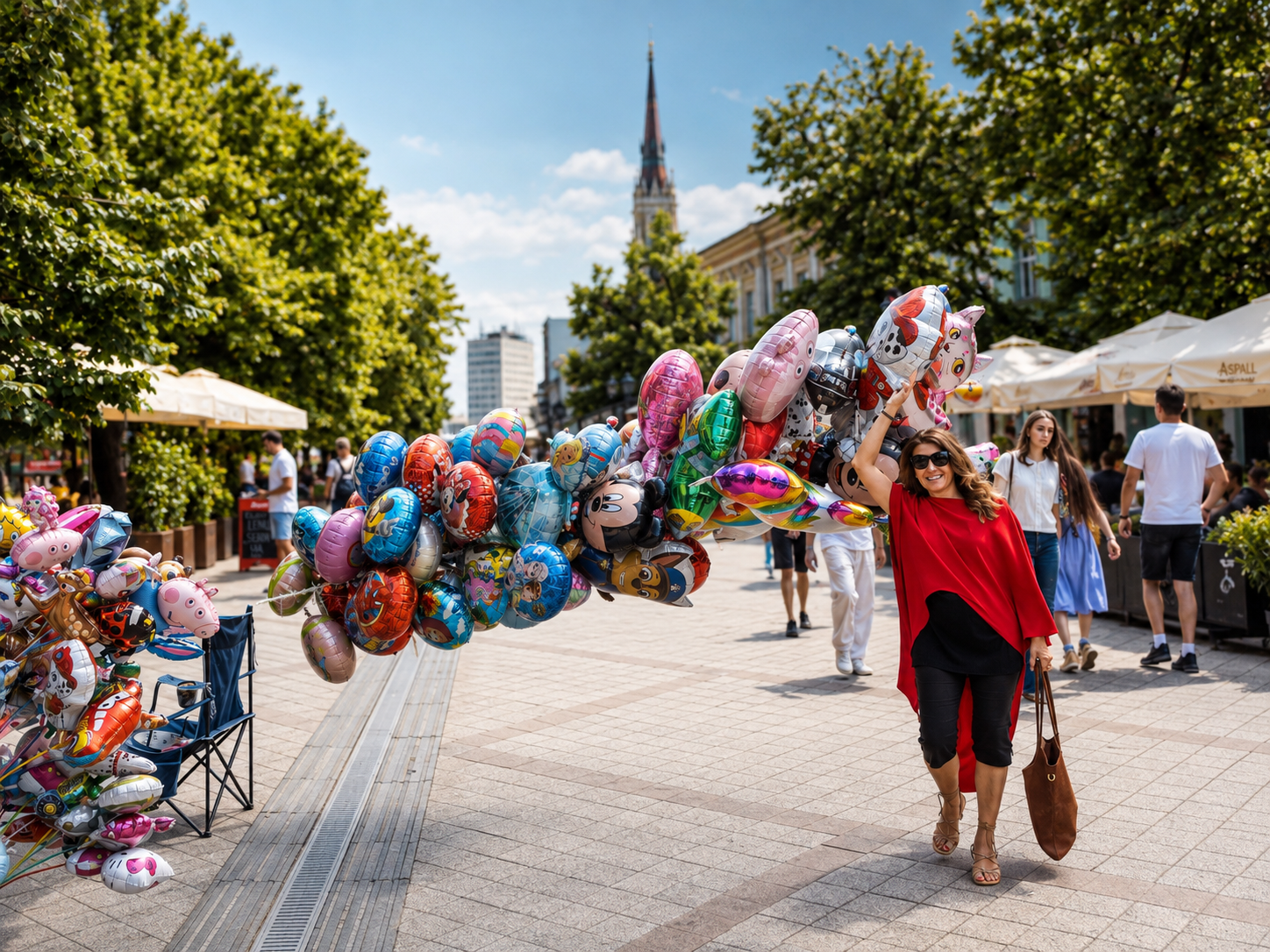
We love Serbia very much, and Novi Sad especially. It's a city that's easy to fall in love with: cozy streets, a calm atmosphere, beautiful views, open people, and a sense that here people know how to enjoy life.
And it was especially gratifying to see that this is exactly the mood that made it onto the screen.
Yes, some details are inevitably adapted during editing, something becomes more compact, something more television-friendly. But the main thing stays unchanged: the episode really does convey the atmosphere of the country.
After watching, you want to come here, walk the streets of Novi Sad, meet the people, try the local cuisine, see the Danube, and simply feel this unhurried rhythm of life.
We put together a photo report from this shooting day — see how it all looked here.
It is precisely shows like this that help you truly discover countries. They show not only the sights, but also the people, their habits, their character, and their attitude toward life.
And if, after watching, even a few people discover Serbia for themselves or look at it with completely different eyes, then all this enormous work — the preparation, the filming, the editing, the constant surprises, and the thousands of unnoticed decisions — was not done in vain.
P.S. Watch the interview with Zhanna on the Serbian Vibe // Сербский вайб channel — youtube.com/@Serbiavibe.