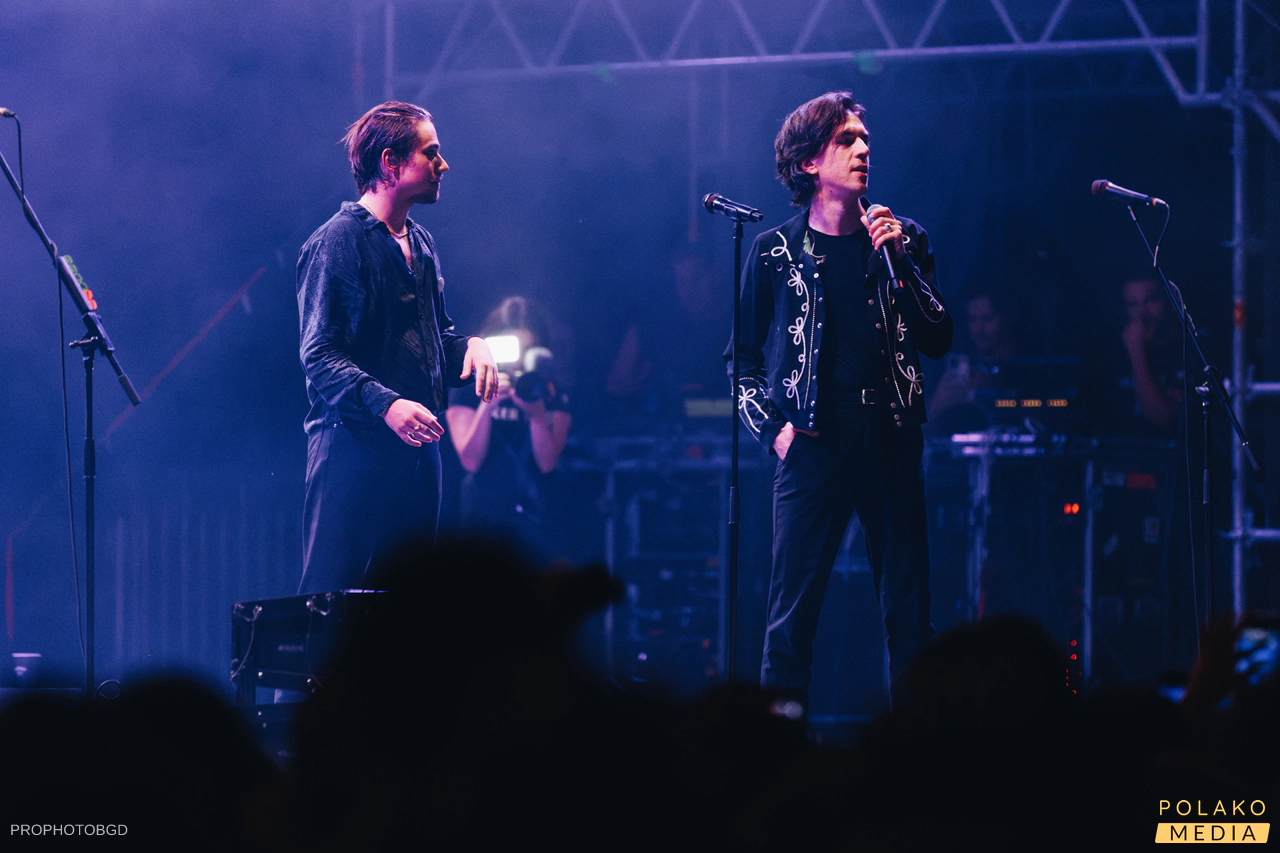
On 23 August the Slovenian band celebrated their tenth anniversary with their biggest solo concert in Serbia. Devito and Luka Račić from Buč Kesidi appeared onstage at Luka Beograd, but the main participant of the evening was the crowd, which sang in Slovenian and Serbian louder than the stage.
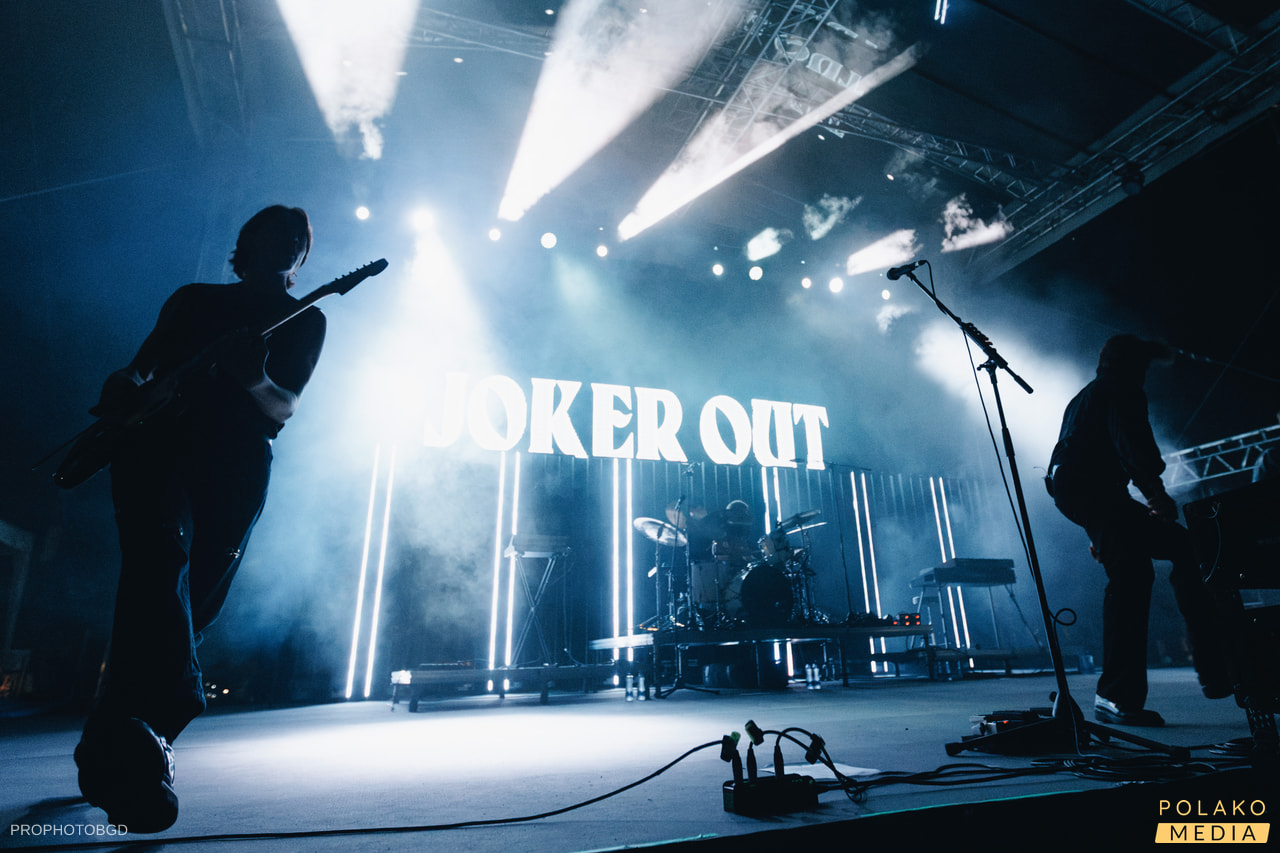
In the evening of 23 August the Open Air Corner at Luka Beograd stopped being just a concert venue. The audience filled the space by the Danube and turned it into one big choir, where nationality, age and knowledge of the language no longer mattered much.

When Joker Out came on stage there was no long introduction needed. The show opened with “Umazane misli”, and the first chorus already showed the balance of forces: Bojan Cvjetičanin was the frontman, but the second vocalist was the whole hall. That was followed by “Muzika za decu”, “Plastika”, “Ona” and “Barve oceana”.
After the first songs Bojan paused for a few seconds, looked at the audience and admitted he could not believe how many people had come. He called the performance Joker Out’s biggest solo concert in Belgrade and Serbia and added that the band would not forget this night.
That might have sounded like a routine concert courtesy. But it became clear that there really is a rare closeness between the band and their Serbian audience. The crowd picked up Slovenian songs without prompts, while the Serbian-language “Demoni”, “Šta bih ja”, “Bluza” and “Ako toga više neće biti” already sounded almost like local folk anthems.

Rock'n'roll that isn't afraid of pop
Joker Out formed in Ljubljana in 2016 and call their style shagadelic rock'n'roll. Behind the playful label is a clear formula: two guitars, a gripping rhythm, melodies that stick after the first chorus, and a pop sensibility without pretending to be hardened rock.
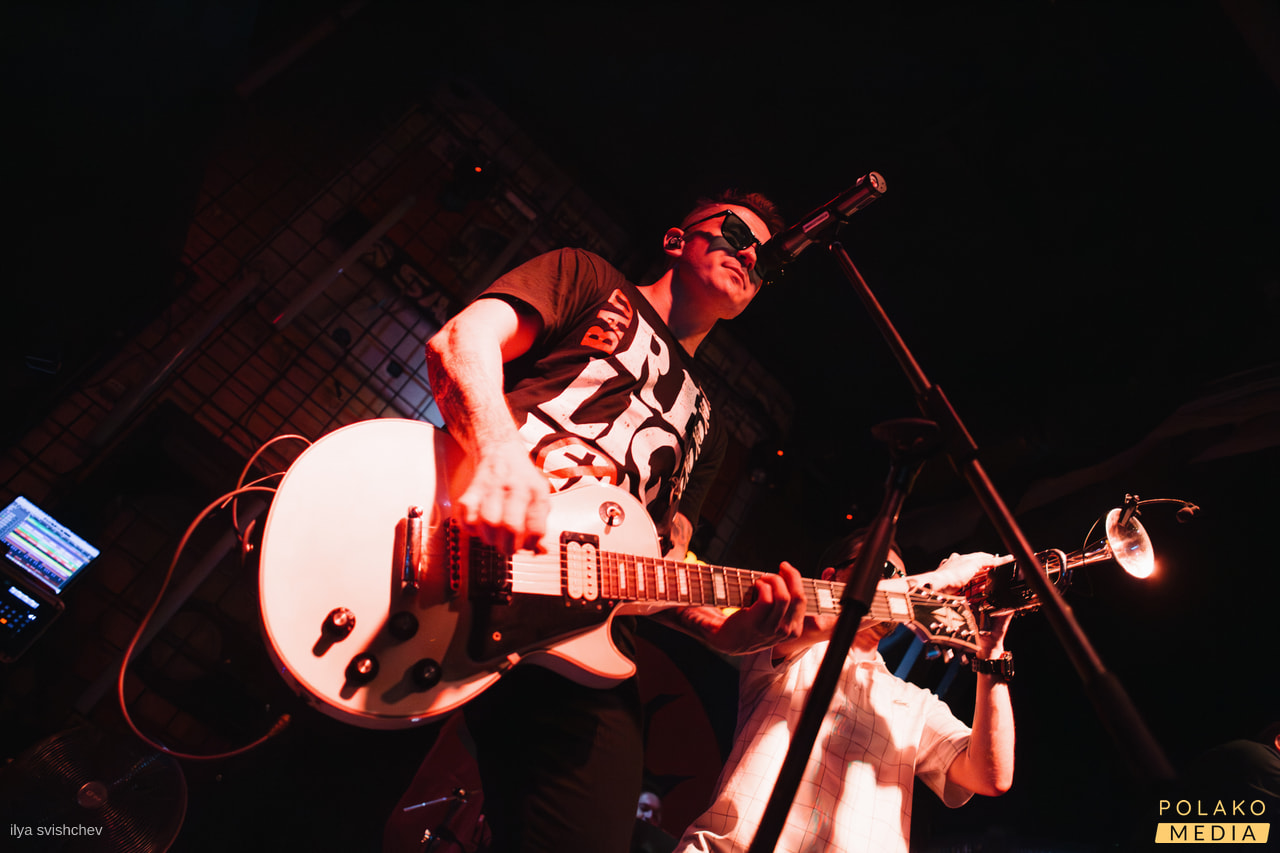
Live, this music sounds denser and sharper than the studio recordings. The guitars of Kris Guštin and Jan Peteh constantly swap roles, the bass of Nace Jordan and the drums of Jure Maček hold a danceable pulse, and Bojan doesn’t so much command the stage as conduct a continuous conversation with the crowd.
The international breakthrough came after Eurovision 2023, where Joker Out represented Slovenia with “Carpe Diem”. But the contest was not the peak so much as a door: it was followed by European tours, the third album Souvenir Pop and an audience far beyond the former Yugoslavia. A telling detail - the bilingual version of “Novi val” was recorded with Elvis Costello.

Devito, the internet and “Supersonic”
The first big surprise was Devito’s appearance during “Supersonic”. Before the song Bojan told the story of how they met. According to him, the internet allows you to write to someone you’ve never met, say: “We made a song with you”, send them the recording and soon get a short answer: see you in the studio in ten days.
“We made a song with you”
On stage, the genre difference between the artists stopped mattering. Devito’s rap sat on Joker Out’s guitar groove without feeling like an artificially attached guest verse, and the audience’s reaction showed that for a new generation of Balkan listeners the boundaries between rock, pop and hip‑hop have long become a formality.
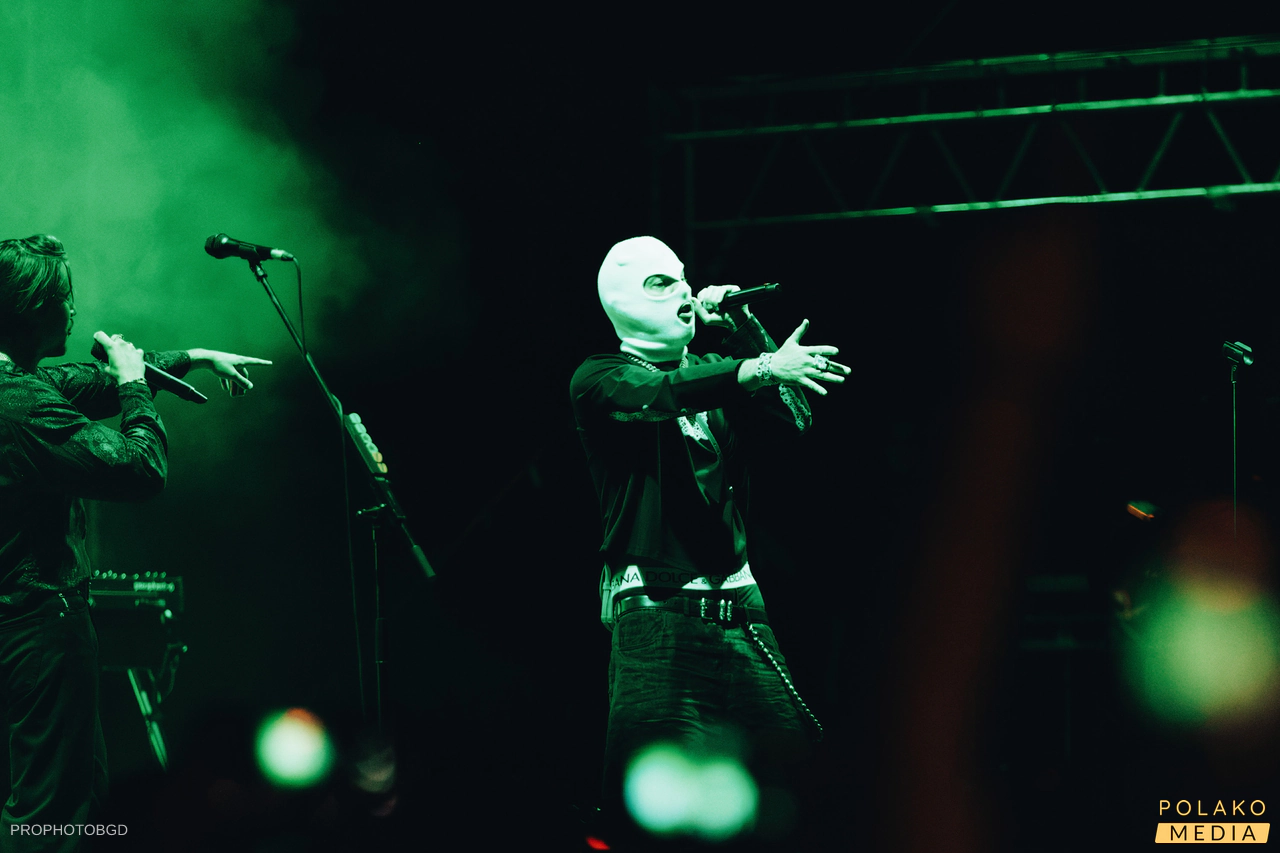
Another local bridge appeared closer to the finale, when Luka Račić from the Pančevo duo Buč Kesidi joined the band. Together they performed “Idemo do hodnika”. The song, long a hymn of the Serbian indie scene, naturally fit into the Slovenian band’s set that night.
How the Finns learned “Šta bih ja” in one night
One of the best stories of the evening Bojan told before “Šta bih ja”. The band first played the song in Helsinki. The lyrics were finished in the hotel right before the concert, and the frontman didn’t have time to learn them. He asked to have a sheet with the words attached to the stage monitor, but the paper was accidentally turned not toward the singer but toward the audience.
Someone photographed the stage, the image quickly spread on TikTok, and the next day, during the second concert in Helsinki, the Finnish audience already knew the words. After that story Bojan asked who had come to Belgrade from other countries. From the crowd answered guests from Finland, Slovakia, Romania, the Czech Republic, Sweden, Croatia and other countries. Luka Beograd became for a few minutes a small map of Europe.

Gifts, a phone on stage and an encore without theatrics
All evening gifts flew onto the stage. Bojan tried on a Vietnamese hat thrown from the crowd, looked at notes and joked with their authors. At one point a mobile phone landed at his feet. Instead of handing it over to security, the singer turned on the camera, filmed himself and the audience, and then returned the phone to its owner.

Even the traditional exit before the encore was turned into a joke. Bojan explained that usually the band has to disappear for three or four minutes, the audience screams and demands more, and the musicians pretend they didn’t expect to come back. He then suggested skipping that pointless spectacle and going straight into the encore.
In the final part they played “Novi val” and “Carpe Diem”. Before “Carpe Diem” Bojan called it the composition that three years ago changed the band’s life, and thanked the song almost as if it were a separate member of Joker Out.
But the audience wouldn’t let the evening end according to plan. After long shouting the band came back once more and repeated “Umazane misli”, the song that had opened the concert. The musicians stepped off the stage and the microphone ended up in the front rows. The circle closed: the night began with a band song and ended with the same song, now effectively belonging to the listeners.

Not nostalgia, but a new regional language
The Joker Out concert showed something important. Young audiences have not turned away from rock'n'roll; they are simply uninterested in its museum rules. They don’t need to choose between guitars and rap, between Slovenian and Serbian, between the artist and the fan community. They want songs in which they can recognize themselves, and concerts where participation is not limited to buying a ticket.
In ten years Joker Out have gone from a young Ljubljana band to one of the region’s major concert projects. The Belgrade show was not just a milestone on that route. It demonstrated why the band keeps growing: Joker Out know how to turn a set of songs into a sense of belonging.
And when the audience at Luka Beograd sang in the language of the neighboring country, rock'n'roll once again did its oldest and most important job - it erased borders, if only for an hour and a half.

Full photo report by photographer PROPHOTOBGD: https://polakohedonist.club/en/gallery/7093072b-0a0a-42d8-8299-eb9b689b748d