The unfamiliar scares, so come closer: in Belgrade pet rat enthusiasts are changing public perception.
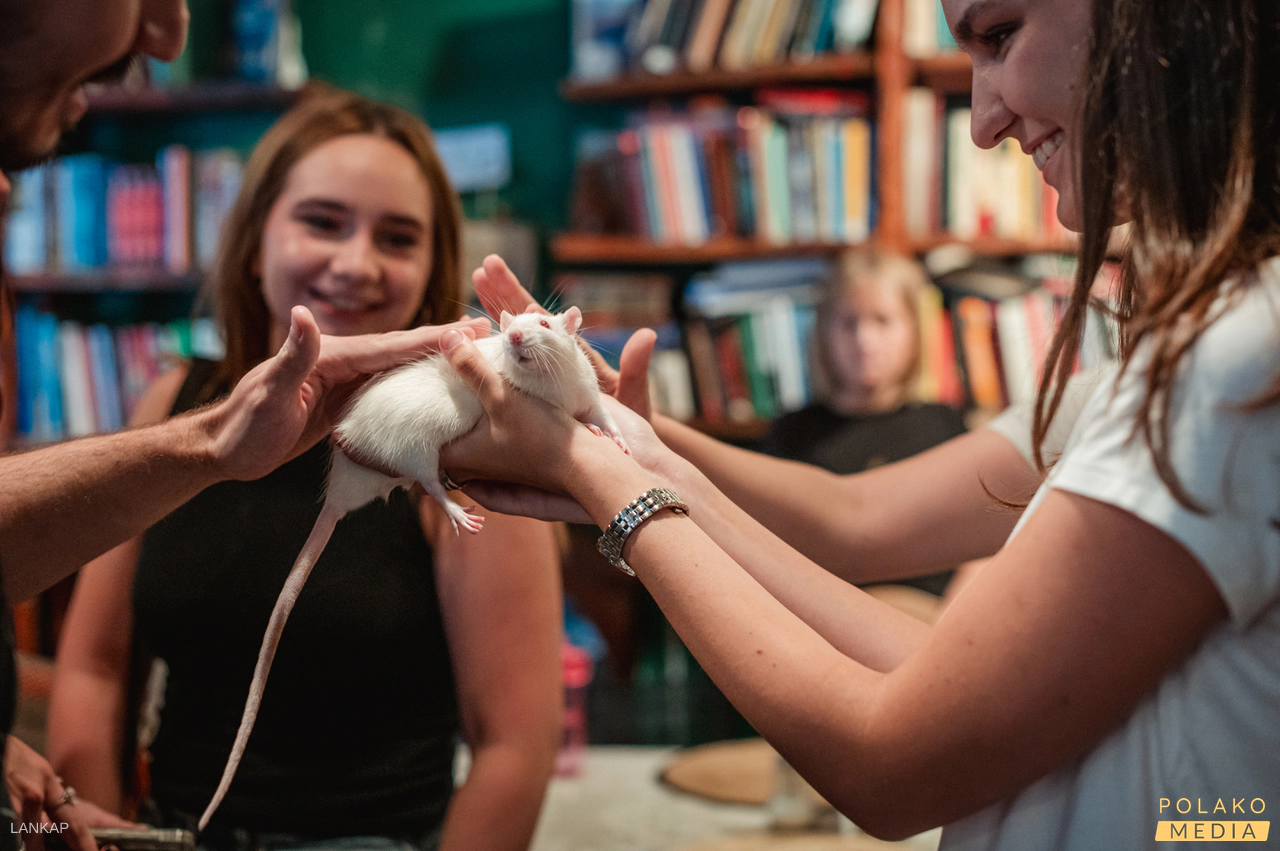
On the evening of August 26 the book bar Dobar Dabar in Belgrade turned for a few hours into a place where one of the city's most persistent fears could literally be held in your hands. About 70 people attended the fourth meeting of rat enthusiasts: pet owners, families with children and curious visitors who decided to meet decorative rats for the first time.
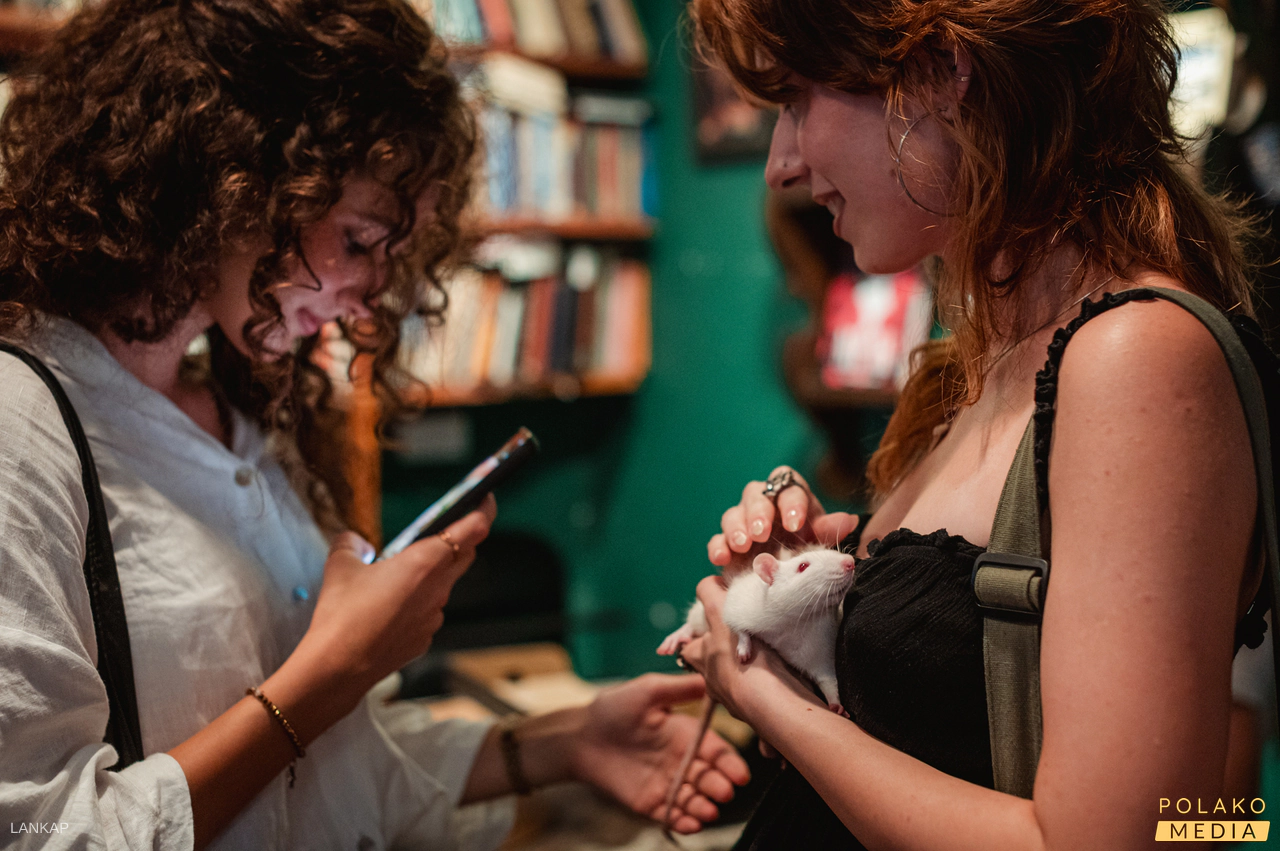
They were gently picked up, stroked, examined and photographed. But this is not a petting zoo. It's important to understand that pet rats are very social and curious creatures: they trust people and enjoy meeting new ones, they can be stroked and scratched behind the ear, they may fall asleep in your lap or go exploring on your shoulders. Rats are made for interaction and are very much like people in that way.
Still, owners need to watch whether guests are holding their rats correctly, not squeezing too hard, or whether the rat should be put back in its carrier to rest, drink or go to the toilet. Rats are very patient, and owners must be attentive and caring.
33 years alongside rats
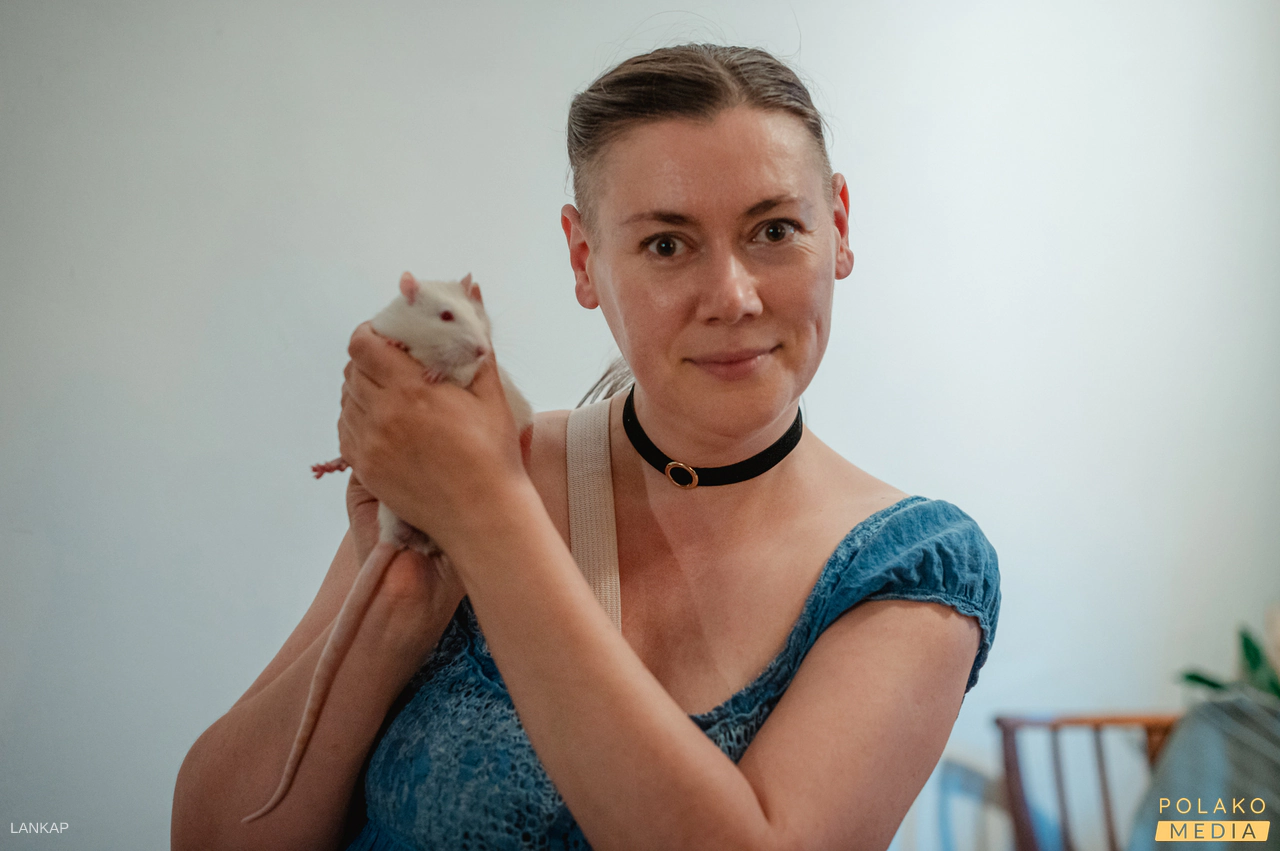
The organizer of the meetings, Svetlana Pazhilceva, is a photographer who collaborates with Polako Media. Her own story began long before she moved to Serbia, when as a child her mother bought her a hamster, then mice and other small animals. Later, at the Bird Market in Russia Svetlana accidentally bought a "scary white" rat and discovered a new world.
"Rats are like dogs. They love people, love to be close and love socializing. Rats are about trust," says Svetlana.
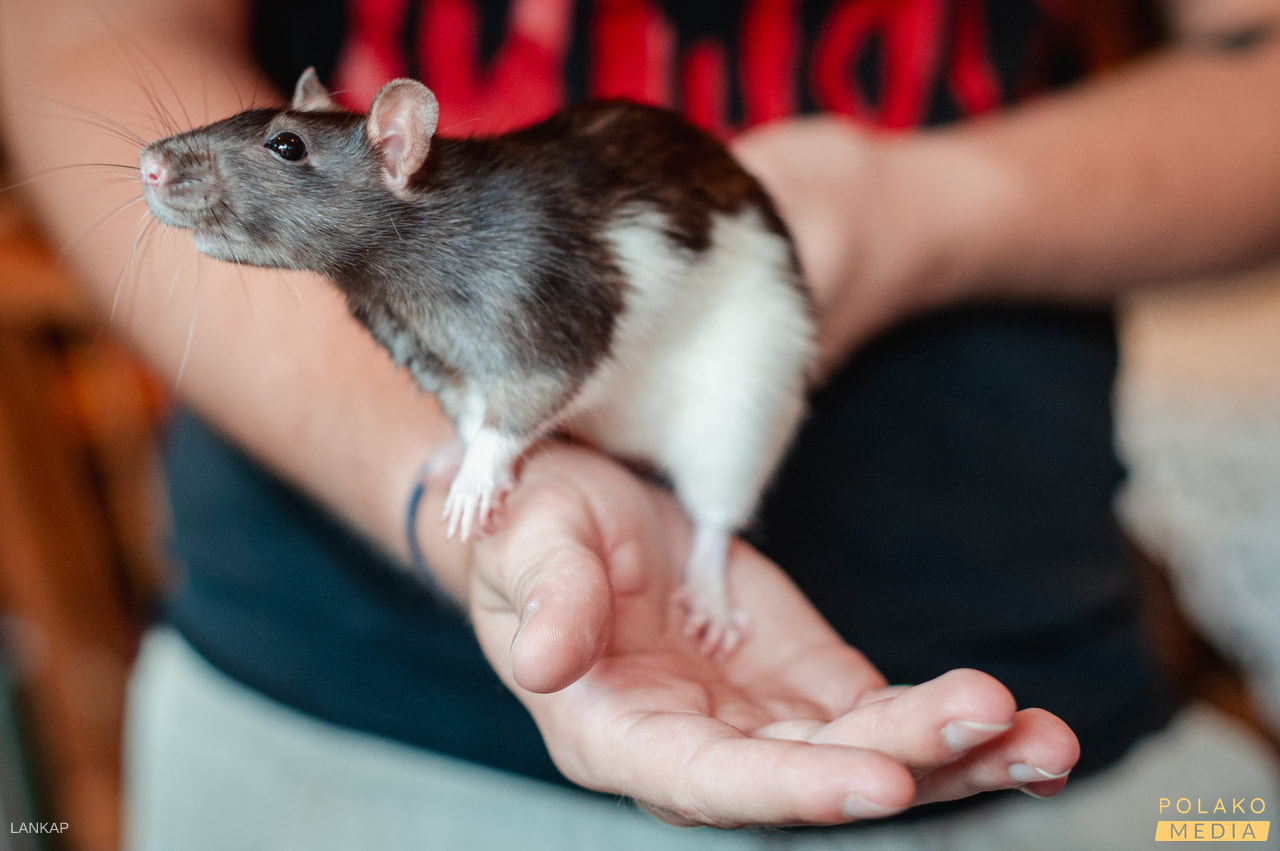
Svetlana emphasizes that pet rats are very different from wild rodents — especially in character and behavior. Over generations, the calmest, tamest individuals were selected; these animals know their owners and their names, can be trained and enjoy solving puzzles.
Of course, everyone remembers that rodents in the wild can carry diseases. But a pet rat lives in a cage, it doesn't roam the streets and has no opportunity to pick up frightening infections to pass on... These animals are very clean and safe for people.
Despite their advantages, rats cannot be called low-maintenance pets that only need a cage and a bowl. They are social animals that require lots of interaction, mental and physical stimulation, and — importantly — the company of conspecifics, so rats are usually kept in single-sex groups of 2–4 (or mixed groups with neutered animals).
Rats live on average two to three years and are prone to fragile health (most often cancer and respiratory problems), so they need regular veterinary check-ups and often treatment and injections. Veterinary care can be expensive, and a prospective owner should understand this in advance and be prepared both emotionally and financially.
"Rats don't have short lives, they have fast ones. Small animals and fast metabolism," Svetlana explains.
Wild rats in nature live less than a year; their purpose is to reproduce, after which an individual loses value for the population. But not for a loving owner — rats are treated, operated on and saved, extending their lives two to three times. Rats can be grateful and they very much love life.
How a small enthusiasts' meeting became a city event
The first meeting brought a few dozen Russian-speaking owners, some of whom had brought their pets from Russia. There, pet rat clubs have been active since the early 2000s, while in Serbia the whole process has to start from scratch: no shows, no competitions, no proper breeding work, and veterinary care for rats is hard to find... but there is a rat owners' chat on Telegram where people find support and understanding.
Before the second meeting information was also posted in the Serbian-speaking internet, including on Polako Hedonist and Polako Media. It turned out that interest went far beyond the Russian-speaking community: many Serbian guests came, some brought their own pets, and there was a real queue of people waiting to stroke the rats. Dozens of people patiently waited to touch a real rat for the first time!
The fourth meeting confirmed this was no longer a chance gathering of a few acquaintances. About 70 people of different ages visited the Belgrade bar Dobar Dabar. From 17:00 guests could ask questions about diet, health, temperament and care for rats, and at 18:00 direct introductions to the animals began. People arrived early.
Photos from the meeting convey the atmosphere better than any statistics: rats sit calmly on shoulders and hands, peek out of carriers and move from their owners to new acquaintances. Children, teenagers and adults stand nearby. Some came with their own pet, others dared to touch a rat for the first time in their lives.
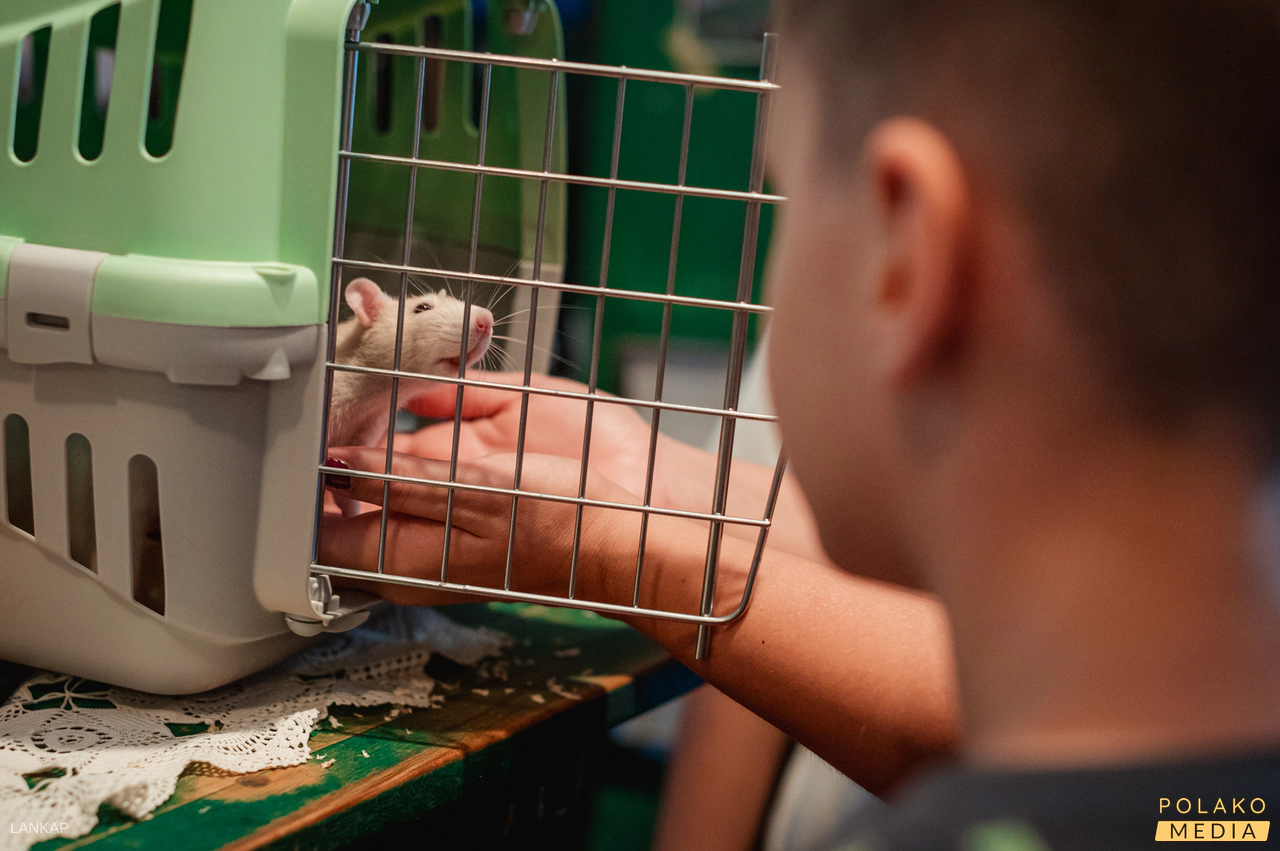
This format doesn't work like a lecture or a debate with stereotypes. It gives people a personal experience. That is exactly what happened with a correspondent from Euronews Srbija, who went to Svetlana for an interview before the meeting. At the start of the live segment the journalist feared a rat would bite her. By the end she was holding Fima, a white rat, and admitted she was at a loss for words.
"Pacovi mog života": 15 years in photographs
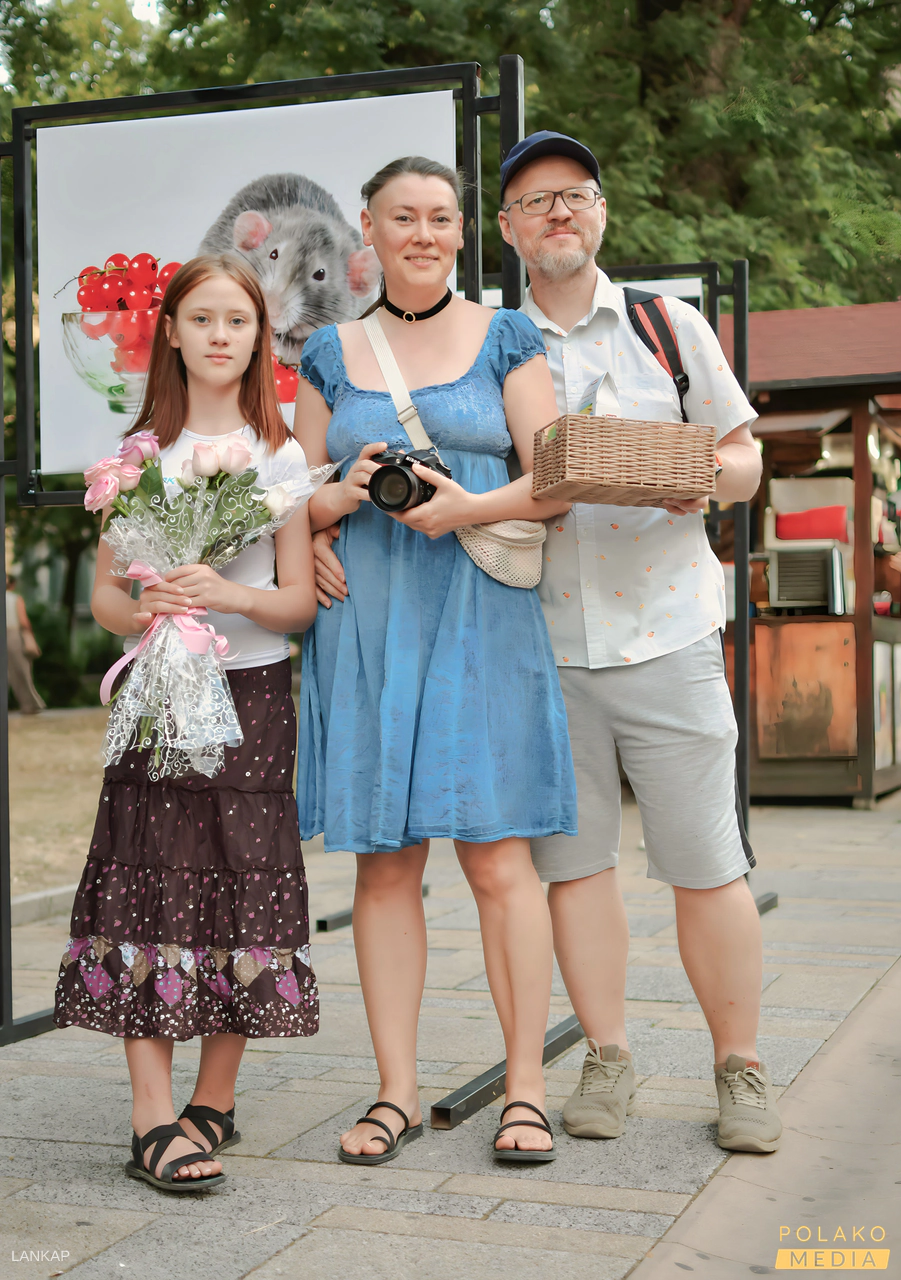
The meetings in Belgrade are only part of Svetlana's work. On August 17 a photo exhibition titled Pacovi mog života — Rats of My Life opened on the main promenade in the town of Vrnjačka Banja. The exhibition, included in the city’s cultural summer program, runs until September 20.
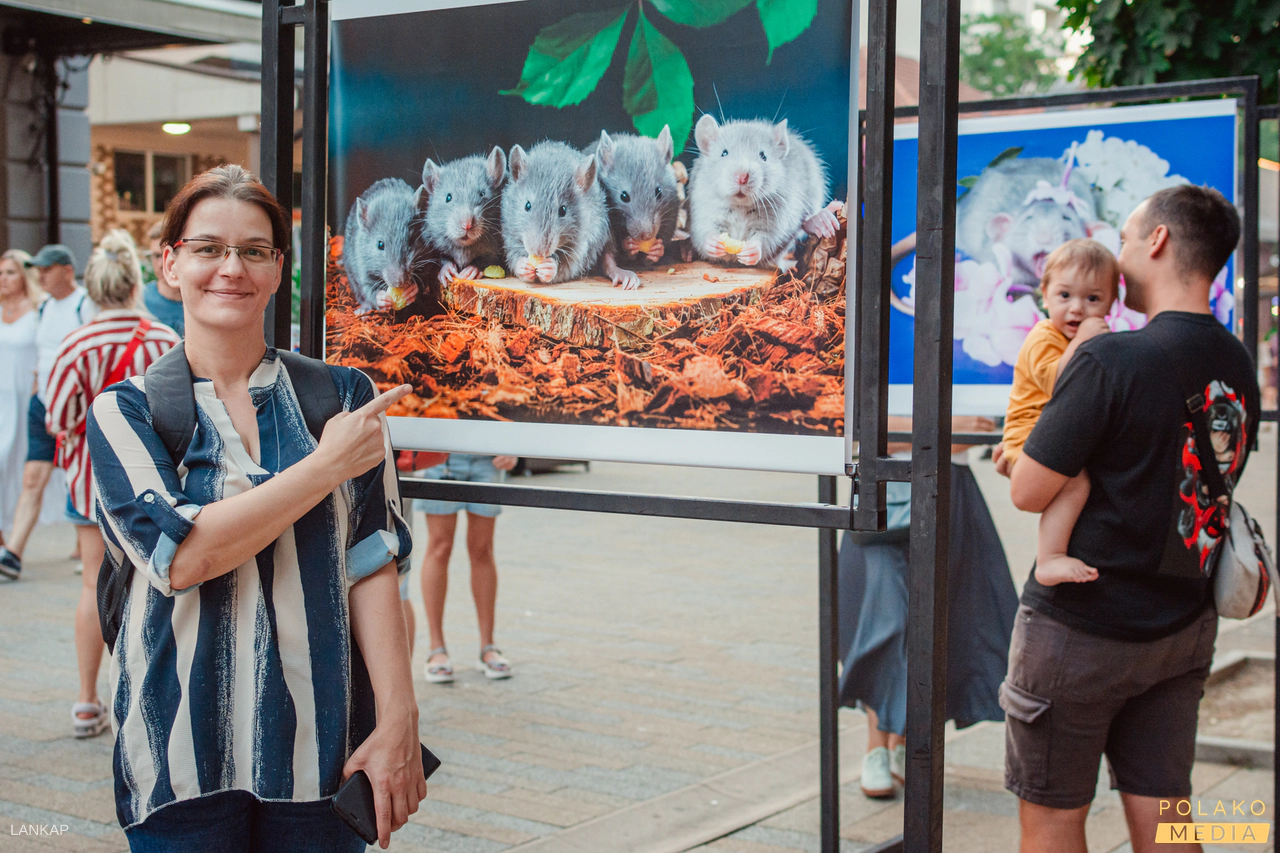
On large outdoor panels you can see photos of rats of different colors, coat types and ear shapes. According to Svetlana, pet rats come in more than 40 color variations, including:
- black
- white
- red
- blue
- siamese
- hairless
- curly
- and other varieties
But the show does not resemble a breed catalogue. In some photos rats pose among flowers and fruit; in others they look straight into the lens, showing different poses and even facial expressions. Human hands appear in some frames — not to hold the animal, but as a sign of trust and closeness.
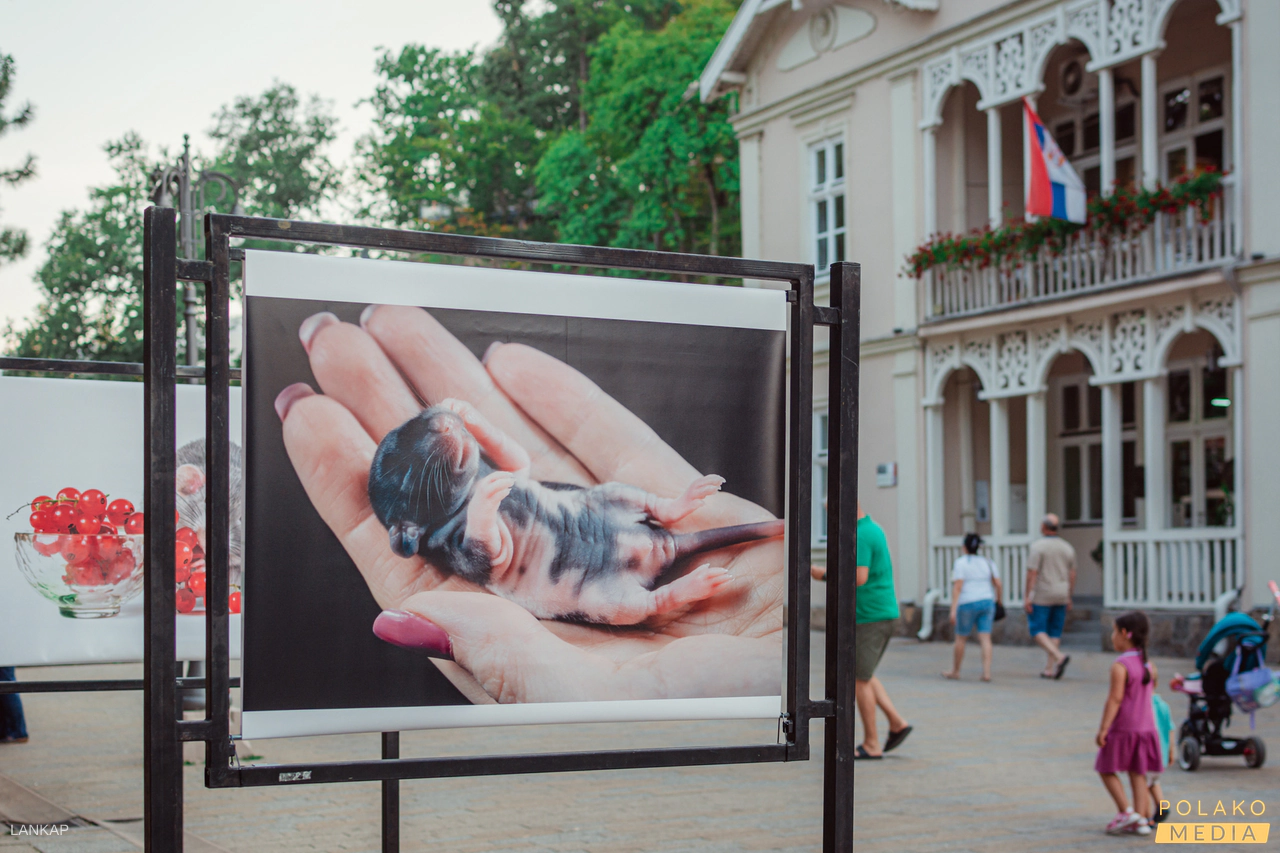
Svetlana long wanted to show rats from another side: not as the faceless inhabitants of basements and sewers, but as intelligent, clean and social pets capable of forming bonds with people. Opening the exhibition, the head of the Vrnjačka Banja Cultural Center called it unusual but stressed that the works contain a full artistic perspective.
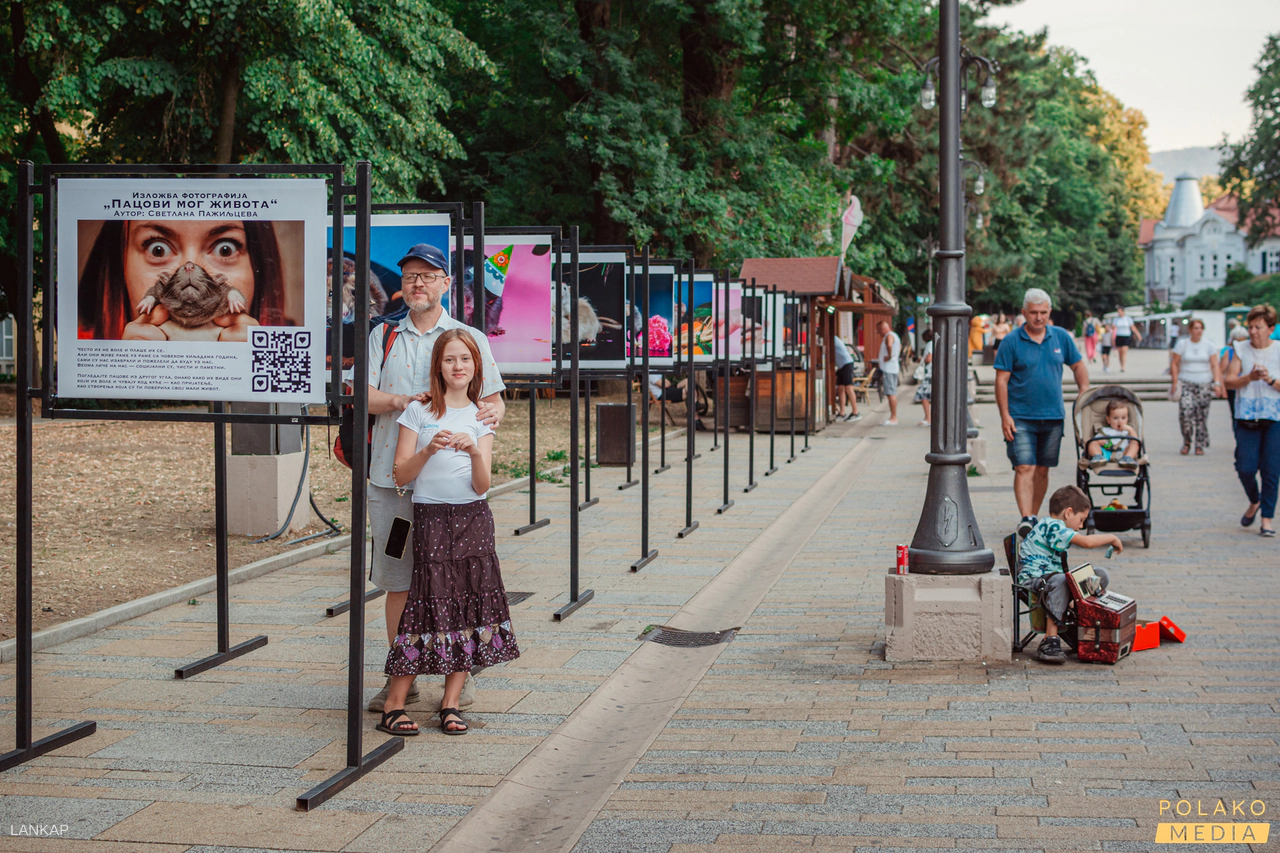
For Svetlana the photos have another, very personal meaning. A rat's life is short, and a photograph often becomes the memory of a pet that is no longer alive. So Pacovi mog života is not only an attempt to change public perception. It is also a visual archive of short lives, each of which was important to its human.
Getting closer instead of being afraid
Both the Belgrade meetings and the exhibition in Vrnjačka Banja are based on one idea: fear often remains at a distance. While a rat is an abstract, unknown animal it is easy to feel disgust. But a large portrait reveals personality and individuality, and a meeting over a cup of tea adds warmth, curiosity and trust.
Indeed, tea with rats has long been a tradition at the St. Petersburg rat owners' club, where weekly events gather dozens of tailed and bipedal participants. Now the idea in Belgrade no longer seems strange.
If so many people are willing to spend an evening next to animals many once feared, then the most important result has already been achieved: curiosity has replaced disgust, and the urge to step away has been replaced by the desire to reach out a hand.